
ISO Rays
a defense of heat, radio, sense and instinct

The waffle iron was still on the kitchen table from breakfast. Mom placed the dinner antipasto in a clear glass bowl next to it. Little yellow pickled boquinho peppers, olives sliced in half, diced cheddar. Things that were already in the fridge. I told her to dress it like it was any salad, maybe add some dried oregano, drops of vinegar. As we sat down to eat I watched mom’s hand reach for the waffle iron with the intent of removing it from the table, so that there was more room for the dinner plates. Before doing so, she opened it and smiled. There inside were two strips of bacon she had forgotten about. She had placed them there in the morning after breakfast, not long after she had unplugged the waffle iron. She had hoped the bacon might stay warm there.
Good cooks know the warm places in their kitchens. Heat is not a constant thing. Even in ovens with dials turned to a single number, the heat is always fluctuating. The pilot surges and recedes, the temperature drops when the door is opened and rises when closed again, the sensor has good days and bad days, the cook dips in and out of phases of checking the actual thermometer she has placed within the oven. Heat is something which requires energy and time to exist. The preheating of an oven, the time it takes to light a grill and watch the coals grow from cool and black to white hot, the patience required to allow a pan to heat over a new flame. Any cook who knows her kitchen understands that sometimes heat is needed in an instant. Keeping the bacon warm in the already hot but swiftly cooling waffle iron, for example. She also knows that low grade heats are important for certain tasks, like getting butter softened, or keeping hollandaise a little warmer than room temperature, or proofing a loaf of bread. Then of course there is the fluctuation of the ambient temperature in the kitchen itself — of the times of day and the seasons and the sun streaming through the windows — to consider.
These warmths with their ever shifting degrees of heat emanate, surge, and dart through the kitchen all year long. They never move at the same rate or traverse the same path twice. No two kitchens are alike. How do we come to know them, to love them, in all their myriad unpredictability? Some have familiar moods. In winter the spot next to the heating vent in the mudroom is warm enough for the brioche dough to rise. In summer, any spot on the counter top is suitable to keep the butter softened if left out long enough. A spot on the counter top is probably warm enough for that same dough to rise, too, but only in summer, and only in a sun ray. The just-turned-off oven is warm enough for the plates at any time of year. In my mother’s kitchen in an old church in New York State on a very cold winter morning, the shelf above the range is not yet warm enough for the olive oil to run freely from its glass bottle. It is sticky and congealed, a solid existing somewhere between oil and liquid gold. This kitchen is not warm enough for bacon to sit out, on top of a greasy towel on a plate. Mom cunningly slips it into the waffle iron.
Life forms know where to look for heat when they need it. My cat Tony, for example, always wants to cuddle as soon as he comes in from the rain. He loves to sit in a sunny spot and knows which heating vent in which room is warmest. Being a cat, he doesn’t have thumbs with which to turn up the heat, preheat the oven, or light a fire. So he is smart and knows where to look, where to scavenge heat from places where it already exists. He’s resourceful in the way he uses his senses. Note the line above, “good cooks know the warm places in their kitchens.” Good because it is good to work with pre-existing heat, rather than wasting the energy that it takes to get something up to heat. Electricity, gas, coals, wood, time. The recipe for creating heat requires tapping finite resources. It is good to know where the warm places are, good to use one’s senses.
Where are the fires, already roaring?
A Portland baker friend, Josh Fairbanks, recently spoke to me about “town ovens.” The word “baker” didn’t used to refer to the person who made all of the bread, but rather to the person who managed the town’s oven. Townspeople would bring their own already prepared doughs to the oven to bake and the “baker” would tend to the hearth. Josh and I mused back and forth about what it would take to build a community oven in Portland. The resources required for such a build-out would be significant, even if it were simply a single large oven situated in someone’s home. Additionally, it would have to be someone’s job to manage the oven, who would pay them? All the local home bakers? And how much? Would it be enough? The questions snowballed and we left the conversation a little disillusioned by the dream. People don’t live like this anymore, there is no place for a community oven in our modular city.
The questions remain:
how much energy, time, and money could a thing like a community oven save?
What would the heat created by such a thing mean for us, our families and friends?
Are there places in our cities, already existing, which emanate that kind of heat?
Heat is both the cause and the effect of encounter. Heat from a fire claws the air at random, like waves, guided by the ever evolving equation of chance. This equation is made up of everything in the surrounding system, air temperature, rate of wind, dryness in both the air and the thing being burned, time of year, age of fuel. There is no way to determine where it will go, no way to really plan. All we can do is find it, catch it at just the right angle. If we manage to do so, heat can bring us together. Home bakers meeting around a community oven. Clear day park picnics. The sunny side of the sidewalk.
What else moves like this? What else moves us like this?
I’ve been listening to the radio more. Not just local broadcasting but also online radio like NTS. I have been hungry for a community of real humans exchanging art outside of algorithmic functions. I have been curious about the artistic exchanges already happening in the ambience around me. The algorithms on social media and listening apps think they know who we are and feed us content based on our already existing interests. Their predictable formula is a pattern which, if followed within the bounds of its own function, steadily narrows our artistic interests over time. It makes us more predictable, less inclined to chance encounter.
Like a fire has the potential to respond to its surroundings and either grow or dwindle, we humans also have a potential for response which leads us towards growth and change. That potential is sense.
What else works like radio? I think about libraries, bulletin boards, parties even. I also, of course, think of cooking and farming — how these practices rely so heavily on sense and one’s reaction to that sense. I once heard on a podcast that a dating app is like walking into a party where 2/3 of the people in attendance are invisible to you. Algorithms inhibit our access to the ambient. They inhibit our senses, our attractions -- and ultimately -- our instincts. What are we humans without our senses? Without our instincts?
Would a fire still be hot if it didn’t respond, chemically react, to its surroundings?
Would a nightclub be considered hot if there were no people, no music, no drinks, no chance of the myriad wild combinations of these happenings on any given night?
As chance would have it, a musician friend of mine, Theo Kranz, recently sent me a link to a radio & tape making residency in Cornwall, UK while I was beginning to formulate thoughts for this piece. The residency lead, Tom Whitwell, a journalist and hardware designer, writes of radio:
Radio is a kind of invisible weather, a drifting archive of voices, music, static and signal that passes constantly through us. It is global, nostalgic, unpredictable and alive.
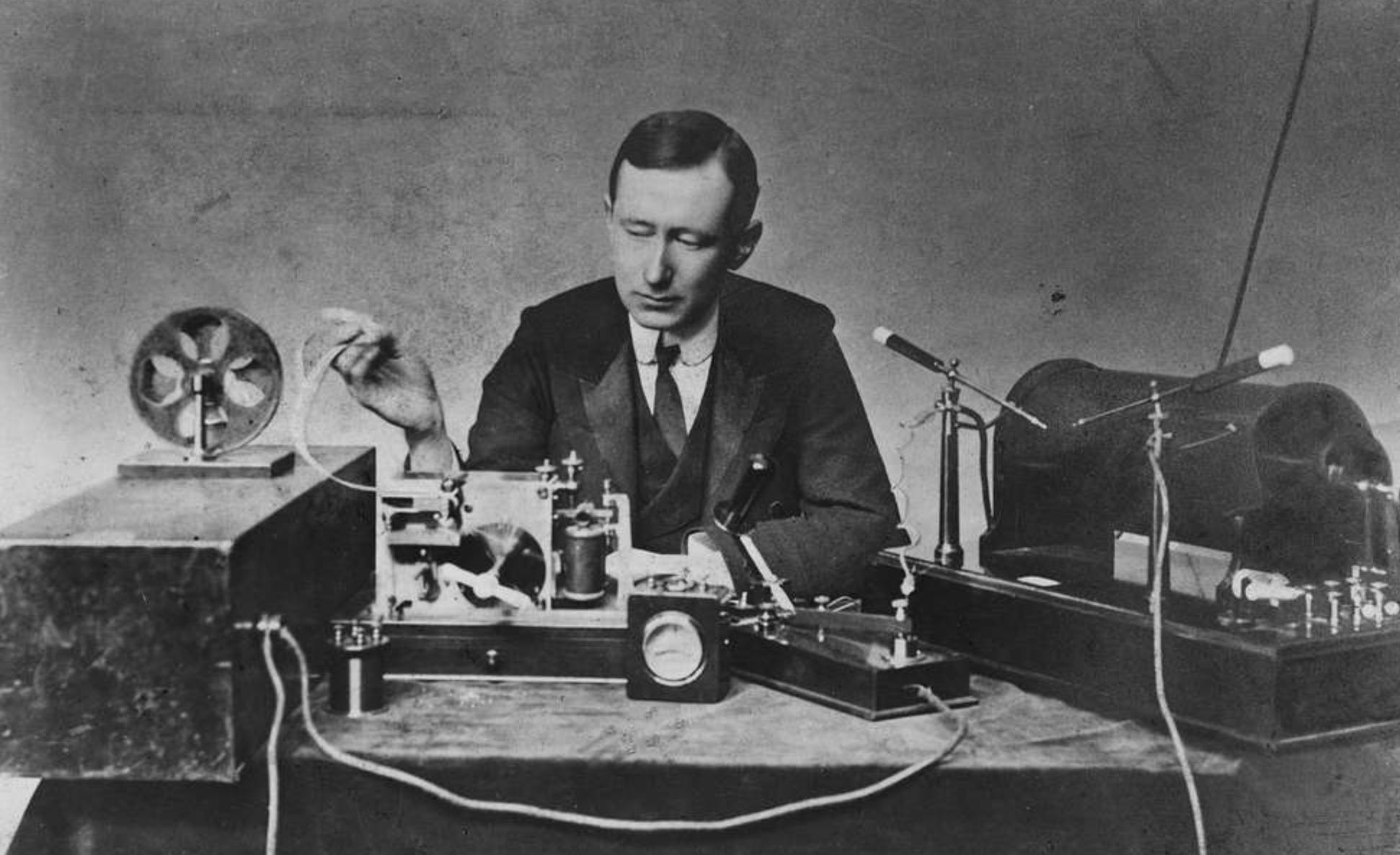
Radio both creates and moves through ambience. Theo says it’s like a perfume. It’s there on the breeze and we have the choice to tune in or not, in the same way a person walks down the street, passes another, and suddenly turns their nose back behind them, following the floating scent. In the same way your cat knows just how to find the ray of sun emanating through the living room window. In the same way my mom knew just where to keep the bacon warm.
In this Fashion Neuroses interview, Debbie Harry explains that it was instinct which empowered her to narrowly escape the clutches of Ted Bundy…
See y’all on the sunny side.
The kids clustered around the radio like a hearth, stay warm .
Love it! I always had a loose idea about a food cart pod that revolved around a big wood fired oven. Not to cook every order in, but to use during a 24 hour period to make the building blocks of each cart. A collection of carts that spring from different cycles of a community oven. Something like that anyway. Ha ha